
Editor’s note: Ashley Kemp Wimberley is the executive director of the Arkansas Press Association, a trade group that represents newspapers and media outlets across the state. The opinions expressed are those of the author.
Professional journalists continue their quest for objective and fair reporting every day and it is appropriate to recognize their work as we celebrate Sunshine Week, which began Sunday.
Sunshine Week is a nonpartisan collaboration among groups in journalism, government and the civic, education and private sectors that shines a light on the importance of public records, open government and the peoples’ right to know.
The Arkansas Press Association, the oldest trade association in the state, is one of the national endorsers of Sunshine Week, which is coordinated by the Joseph L. Brechner Freedom of Information Project at the University of Florida College of Journalism and Communications. The organization provides research, expertise and advocacy for journalists, policymakers and the general public in acquiring government information to foster an engaged and informed citizenry.
Brechner Project Director David Cuillier was a featured speaker at the 2024 APA Convention in Jonesboro. In his address titled “Partly Cloudy: Getting Public Records in an Age of Secrecy,” Cuillier said journalists should humanize citizens’ frustrations when public-records laws don’t allow access and publicly report whenever they are refused government records.
“I think journalists have a duty to tell the public when they’re denied public information. It’s not about the journalists,” Cuillier said. “It’s about the public.”
Cuillier went on to say that “information is essential in a well-run society,” pointing out that transparency requests lead to improvements such as cleaner drinking water, safer restaurants, better schools, fewer wasted tax dollars and less government corruption. In short, freedom of information improves people’s lives and encourages government to be more accountable, cost-effective and honest.
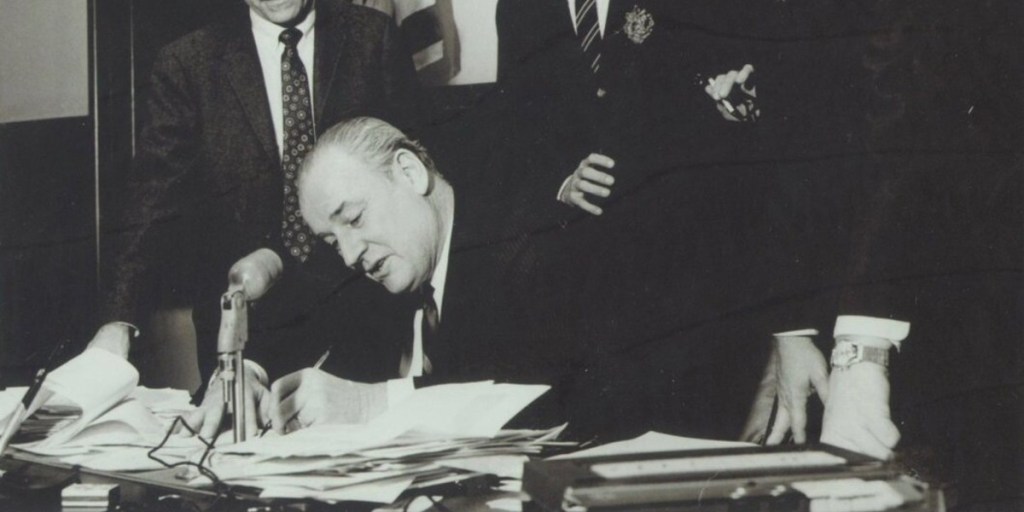
Under leadership of the late Gov. Winthrop Rockefeller, Arkansas adopted in 1967 one of the strongest Freedom of Information Acts in the country. The law has been a model for government transparency efforts nationwide.
However, recent years have seen broadside attacks on the law, as well as many attempts to chip away at its provisions. In addition to protecting the FOIA moving forward, we must also ensure it be used responsibly by both the government and the public.
State and local officials must make sure there is no lack of enforcement of the FOIA laws, and citizens also have a responsibility to use the FOIA in a meaningful and responsible way and not as a weapon — for which it certainly was not intended.
Last year’s landmark legislation, Act 505 of 2025, is a great example of groups working together to make FOIA stronger and clearer. It originated in the Attorney General’s FOIA Working Group and was led in the legislature by Sen. Clarke Tucker and Rep. Jon Eubanks and co-sponsored by a host of other legislators. The act defines what constitutes a public meeting and gives recourse if decisions are made by a public body while in violation of open meetings laws. It is a good piece of legislation, passed with bipartisan support, and one from which Arkansans will benefit for decades to come.
The challenges for newspapers across the nation have been well documented, but despite those challenges we are pleased to note there is at least one APA member newspaper covering each of our 75 counties. Dedicated journalists continue to tell compelling stories about their communities daily. While obviously proud of the continued presence of so many committed community journalists across our state, it must be emphasized that in some counties a lone newspaper is the sole consistent watchdog present.
As these watchdogs, Arkansas’ newspapers are at the forefront of keeping that light burning, but it should be stressed that the effort to make sure that government remains transparent is of utmost importance to every citizen. APA has been a leader in the effort to maintain and promote the tenets of our state’s FOIA, and we thank the many individuals and groups who have partnered with us in this cause. It has been dramatically shown in the past few years that support for the FOIA is one of the few issues that crosses the normally wide gulf of political partisanship.
APA salutes media outlets across the state as they consistently shine light on the state Capitol, as well as delving into the way government at all levels affects the average citizen in our state. We also thank you, our loyal readers, for helping us celebrate Sunshine Week and its importance in maintaining access to information and truth.


 The Grand Prairie Herald