
Editor’s note: The author of this guest commentary is Jeanne Wei, M.D., Ph.D., executive director of the Donald W. Reynolds Institute on Aging at the University of Arkansas for Medical Sciences.
As we age, our goal is to maintain maximum independence for as long as possible, so that we can continue make contributions to society.
Fortunately, there’s a pretty straight-forward solution — exercise.
Exercise enables us to stay physically and mentally independent for as long as possible. Additionally, exercise feels good. It relieves stress and gives us that perky rush of endorphins. It lowers blood pressure and encourages the growth of new cells.
Exercising with a regular group of people also helps satisfy our need for social contact. Group activities also provide the nudge of accountability to keep us on track with our fitness goals.
Let’s talk about some important healthy aging concepts.
Range of motion — We need to find ways to move all of our joints through their full range of motion at least once a day.
Cardiovascular activities — It’s important to get as much physical activity as you can that raises your heart rate, even a little.
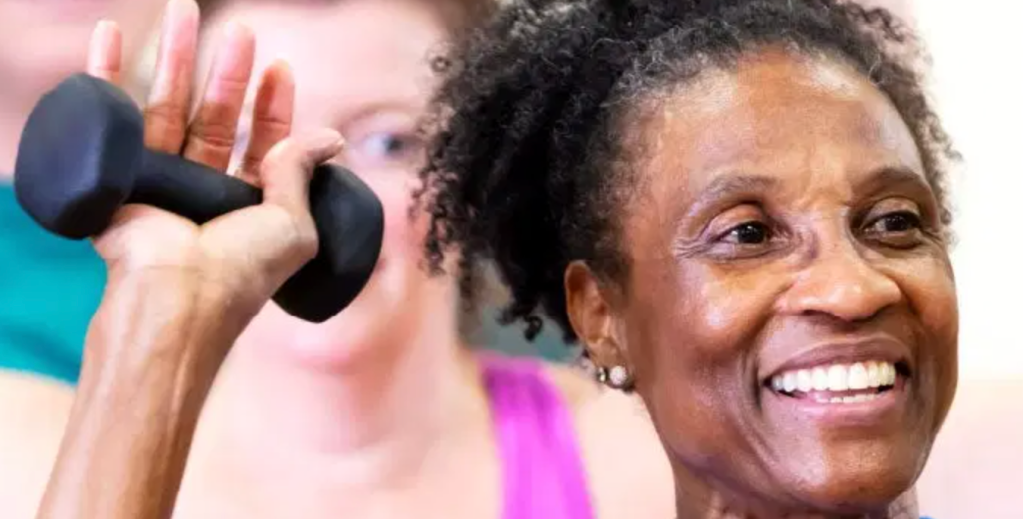
Muscular resistance — Our muscles stay strong and get stronger when we challenge them with weights and other forms of resistance, such as exercise bands or body weight.
Balance — We should practice challenging our balance in controlled environments, so we are less likely to fall, and if we do lose our balance, our bodies have practice at safely catching themselves.
Brain games — We maintain our cognitive abilities in much the same way we maintain physical abilities.
Laughter — Laughing exercises our muscles, aerates the lungs, burns calories and boosts our overall mood.
Putting it all together, what might that look like during the average day?
Shortly after waking, you can stretch, moving your muscles and joints as you do. If mornings are painful on your joints, you can do many of these moves while still in bed. Rotate your wrists and ankles, stretch your neck, shrug your shoulders, twist your spine and move the hip and knee joints.
If you are able, try doing these movements while standing, perhaps combining them with a slow movement tradition like yoga or tai chi, which will also help you improve your balance, coordination and strength. You can also work on your balance during daily activities like brushing your teeth or doing the dishes — try balancing on one leg, and then the other.
As you continue through your morning routine, find a time when you feel your most energetic and try to work in your cardio exercises. This can be as simple as walking in your home. If you have stairs, climb them! Studies have long shown that people who climb stairs on a regular basis live longer.
If you’re able to join a gym or community center, it can provide you with excellent opportunities to work on cardio or muscle resistance in a fun, social group setting. If you’re unable to find a program near you, household items like water bottles and canned vegetables are an easy substitute for fitness weights.
When you’re looking for brain games, remember the best activities for maintaining cognitive health will include an element of challenge. If you’re already great at crosswords, try a number puzzle like Sudoku. Learn a language or start a new hobby. Volunteer and/or attend a class. Research has shown that volunteering enhances life expectancy.
Exercise doesn’t have to be a chore. There are ways to make exercise a fun part of your daily life.
My favorite recommendation is to dance. Dancing calls on your cognitive skills, improves your strength, balance and coordination, and includes socialization. If you can sing while you dance, that’s even better. It sounds silly, but the challenge of singing and dancing at the same time offers the perfect mix of challenges for our brains and bodies.
If you feel the need to laugh at yourself, go ahead. Remember, laughter is one of our goals for staying healthy. So, dance, sing — and laugh — your way into your stronger and more independent golden years.


 The Grand Prairie Herald