
Editor’s note: Jim Harris with the Arkansas Game & Fish Commission is the primary author of this story.
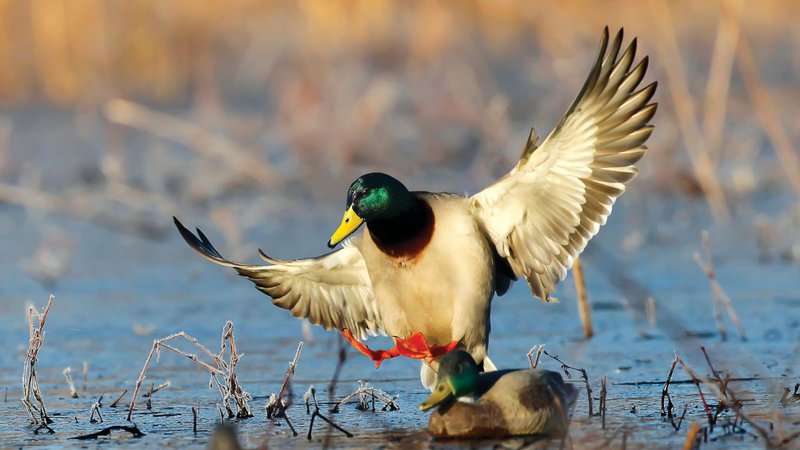
If we know the true, devoted Arkansas duck hunter, a brave few found a way through the snowmageddon of January 2026 to four-wheel their way into their favorite waterfowl spot, attempt to break ice (surely that was necessary, and not easy) and get in another duck hunt this past week before the season wound down Saturday (Jan. 31). The rest of us, no doubt, stayed inside.
Maybe the winter storm that hit across the country and covered the states above us with snow and ice pushed a few more ducks back down through Arkansas and on into southern Louisiana, where folks have been looking for a boost to their waterfowl season.
Arkansas’ regular season wrapped at sunset Saturday (Jan. 31).
Duck numbers down
Arkansas Game and Fish Commission Wildlife Management Division staff conducted the 2026 midwinter survey in the Mississippi Alluvial Valley (the Delta), Arkansas River Valley and southwest Arkansas from Jan. 5-13.
Released Jan. 21, the latest data indicates dramatic changes in the waterfowl population since the previous survey conducted just two weeks prior. The January survey estimated 574,940 ducks in Arkansas, 351,900 of those being mallards.
The Dec. 10-23 survey showed 1,030,824 ducks in the state.
That is a 455,884 decrease in total duck numbers. The favored species of duck hunters, the mallard, showed a decrease of 143,835 in Arkansas numbers, down from the previous count of 495,735 to 351,900.
However, the deficit in current duck numbers from the December count is potentially skewed.
“We have less confidence in our December estimate because it may have been biased high due to dry conditions with large accumulations of birds around limited water sources,” said Arkansas Game and Fish Commission Waterfowl coordinator Brett Leach.
Waterfowl are counted along specific flight paths, which may fall where birds are bunched due to surface water and habitat resources.
The Delta mallard population estimate was 117,908 mallards below the 2025 mid-winter survey estimate and 427,502 mallards below the 2010-2025 survey long-term average.
Total duck population estimates were 137,386 birds below 2025 mid-winter survey estimates and 640,394 birds below the long-term.
Snow geese rising
Based on the numbers seen by AGFC biologists in their waterfowl surveys so far this season, the snow goose population in Arkansas seems in great shape this season compared to recent years.
Snow geese began arriving in Arkansas County earlier, before Thanksgiving, than in recent years and the numbers have steadily picked up. Estimated counts of lesser geese were close to 2 million in the late December survey and still over 1.4 million in the midwinter survey of waterfowl in Arkansas’ Delta.
The Light Goose Conservation Order opens on Sunday, Feb. 1. During the Conservation Order, hunters have more liberal regulations while hunting snows, blues and Ross’s geese (greater white-fronted geese and Canada geese cannot be hunted during the Conservation Order).
The order is halted for the Feb. 7-8 youth, veterans and active-duty military hunts, but resumes on Monday, Feb. 9, and concludes on April 25.
There is no bag or possession limit of geese harvested during the order, which was established by the U.S. Fish and Wildlife Service so that hunters could reduce the snow, blue and Ross’s goose numbers through increased harvest.
Shooting hours are from 30 minutes before sunrise to 30 minutes after sunset.
Looking Ahead
Youths under 16, veterans of the armed forces and active-duty military will get the final hunts of Arkansas’ 2025-26 duck season on Saturday and Sunday, Feb. 7-8, statewide.
Youths may apply for any of the Waterfowl Rice Incentive Conservation Enhancement (WRICE) program fields that are made available for that weekend. Those fields are privately owned and managed by their owners to help waterfowl habitat; part of the agreement with the AGFC’s Private Lands Habitat Division is that the fields are made available to permit draw hunts from the public on weekends.
The program has been a huge success this year in the number of applications, where more than 900 applicants sought a field on opening weekend (the most ever to apply by about 300 applicants) and other weekends have drawn 700-800 or more applicants to the 40 or so available fields.
Youths just need a customer identification (CID) number through the AGFC licensing system to apply. The system is set up to recognize the age of the applicant, and unfortunately, that will mean that veterans and active military won’t be able to apply for permits for WRICE.
Youths may also apply for the designated youth blinds in the WMAs that contain them (Steve N. Wilson Raft Creek Bottoms, Sheffield Nelson Dagmar, Freddie Black Choctaw Island West Unit and Frog Bayou). All the WMAs outside of the designated youth blinds will be open for hunting for youths, veterans and active military next weekend.
Youths winning a permit for a WRICE hunt may take up to three others (a non-hunting mentor who can call and retrieve the ducks, and two other youths; or two non-hunting mentors and another youth) along for all-day hunting at the same WRICE field Feb. 7-8. The same rules apply for a permit to the youth blinds (they are for one of the two days).
Youths who have not completed a hunter education course must be accompanied by a mentor 21 or older. With the way the hunts are set up concurrently, and with the second day restored to the veterans and active-duty hunts this season, veterans can mentor the youth and hunt both days.

 The Grand Prairie Herald